

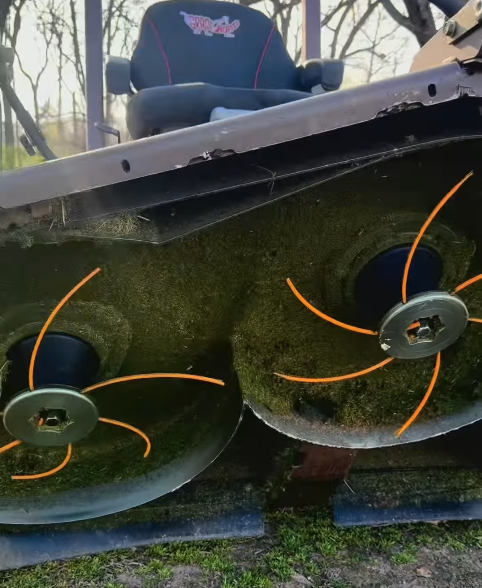
A lawn mower blade replacement that installs with a finger and a thumb and holds so securely that a D9 Cat could not pull it out. That is not a product pitch. That is the actual engineering standard the team at Blade Solution gave to the engineers at Cobalt when developing the REVO6 2.0, and it is the standard the finished product lives up to every single time.
Getting there was not a straight line. It took a 3D printed nylon prototype, two major design iterations, years of real-world testing, and a commitment to not releasing the next version until the previous one had been thoroughly validated by the people actually using it. The result is a lawn mower blade replacement that looks nothing like where it started and performs in ways that none of those early prototypes could have fully predicted.
Where Every Lawn Mower Blade Replacement Idea Begins
Most product development stories start the same way. Someone runs into a problem, decides there has to be a better answer, and builds the roughest possible version of that answer just to see if the core concept holds up.
For Blade Solution, that rough version was a 3D printed nylon prototype. It was not pretty. It was not production-ready. It was not intended to be either of those things. It was designed to answer one question: does this actually work?
The answer came back clearly. It worked. A flexible line system mounted to a hub and used in place of a traditional rigid metal blade could cut grass, reduce equipment stress, and handle terrain in a way that a metal blade simply could not. The concept was validated, and that validation was enough to justify the next step.
From Nylon to Aluminum: The First Real Version
The first commercial iteration of the REVO6 came in aluminum. It was bulkier than what the product would eventually become, heavier than ideal, and unmistakably a first-generation design in all the ways that first-generation designs tend to show their work. But it worked. That was what mattered most at that stage.
The aluminum version did not exist to be perfect. It existed to get into the hands of real users on real mowers cutting real grass across every terrain type imaginable, and to generate the kind of feedback that no amount of internal testing can replicate. When a product goes out into the world and people start using it daily, the data that comes back is different in quality and specificity than anything a development team can produce on its own.
That feedback was what the team needed, and it delivered. Customers who had been using the first aluminum version came back with detailed, honest assessments of what was working, what could be better, and what they wished the product could do. Every piece of that input went directly into what came next.
REVO6 1.0: Defining the Product
The REVO6 1.0 represented the first time the product started to look and feel like the finished vision. The design had been refined. The bulk of the aluminum prototype had been addressed. The core system, the hub, the line configuration, the installation approach, had been sharpened into something that felt intentional rather than experimental.
The team was genuinely pleased with it, and they had good reason to be. The 1.0 validated not just that the concept worked, but that it could work at a level of refinement that made it a credible lawn mower blade replacement for a wide range of mowers and users. The feedback from that version was strong and it was specific, and that specificity was the foundation everything else was built on.
Great feedback does not just tell you that people like a product. It tells you exactly what would make them love it. That is what the 1.0 delivered, and that feedback is what made the 2.0 possible.
REVO6 2.0: The Standard That Could Not Be Compromised
When the development of the 2.0 began, the team brought a very specific set of requirements to the engineers at Cobalt. The product had to install simply. No tools beyond what the mower already required. No complicated process that varied from mower to mower. The line had to seat with nothing more than a finger and a thumb.
And once it was seated, it had to stay. The brief given to the engineers was direct: it should not be possible to pull the line out with a D9 Cat. That is not a standard most engineering teams hear often, and it is not one that gets met easily. But it is the standard the 2.0 was built to, and it is the standard it meets.
What makes that achievement notable is the second half of the equation. Removing the line when it is time to replace it is just as simple as installing it. Finger and a thumb. The same two-point contact that sets the line seats it securely enough to withstand everything a commercial mowing operation can throw at it, and releases it cleanly when the time comes.
That balance between holding strength and ease of removal is not an accident. It is the product of a development process that went through multiple generations, incorporated real-world feedback at every stage, and refused to move forward until the previous version had genuinely earned it.
What the Journey from Prototype to 2.0 Actually Means
For the person buying a lawn mower blade replacement, the engineering history behind the product is not something they are usually thinking about. They want to know if it fits their mower, if it will hold up, and if it is actually going to make mowing better. Those are fair questions, and the REVO6 2.0 answers all of them.
But the path from a 3D printed nylon prototype to an aluminum proof of concept to a refined 1.0 to the 2.0 is the reason the answers to those questions are as strong as they are. Every generation of feedback, every design refinement, every engineering standard that got set and then met, is baked into the product that ships today.
This is not a lawn mower blade replacement that was rushed to market. It is one that was built deliberately, tested seriously, and improved continuously until it was genuinely ready.
The REVO6 2.0 is available in residential, suburban, and commercial packages at safemowing.com, backed by a 90-day money-back guarantee and a lifetime warranty on the hub. The revolution started with a nylon prototype. It is ready for your mower now.

 https://safemowing.com
Share and get 15% off!
Simply share this product on one of the following social networks and you will unlock 15% off!